
The 2026 Fudan-Cambridge Global Humanities Conference was held at Fudan University, from 11 to 13 September 2026. An important event in Fudan and Cambridge’s collaboration through the Global Humanities Network, the conference explored the theme “The Pre-modern in the Post-Modern: Global Humanities and the Transmission of Ideas”, examining how pre-modern texts, objects, practices and epistemologies circulate through, and are reactivated within, the frameworks of post-modern global humanities. Scholars from the University of Cambridge and the University of Leeds in the UK, and from Fudan University, Zhejiang University, Sun Yat-sen University, Nankai University, Shanghai International Studies University, Shanghai Normal University and other institutions in China, came together to discuss the development of global humanities, the transmission of ideas across regions and dialogue among civilisations.
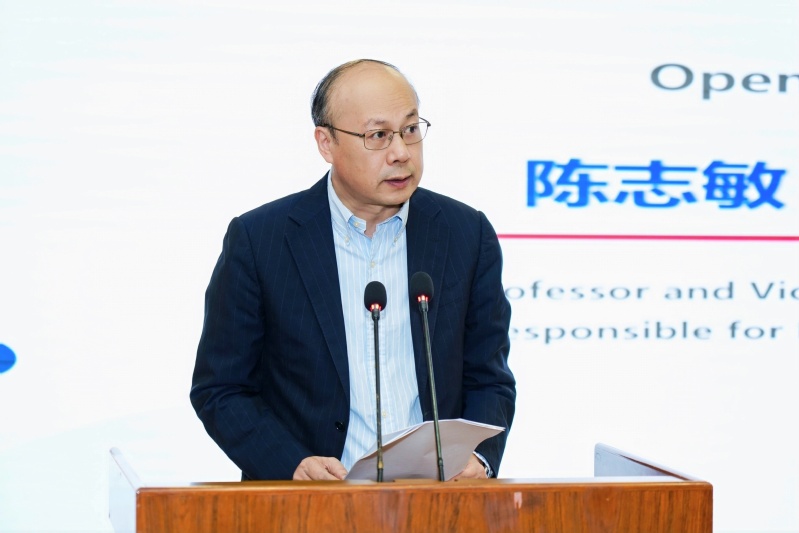
Professor Chen Zhimin, Vice President of Fudan University, delivers opening remarks.
Professor Chen Zhimin, Vice President in charge of the Humanities and Social Sciences, Fudan University, delivered opening remarks. Welcoming the participants, he stressed that the humanities can transcend divides of time, geography, language and culture, helping people understand contemporary society and approach the future with foresight. Since its founding in 1905, Fudan has upheld its deep-rooted humanities tradition. Its participation in the Global Humanities Network has helped the two universities move from dialogue to sustained scholarly exchange.
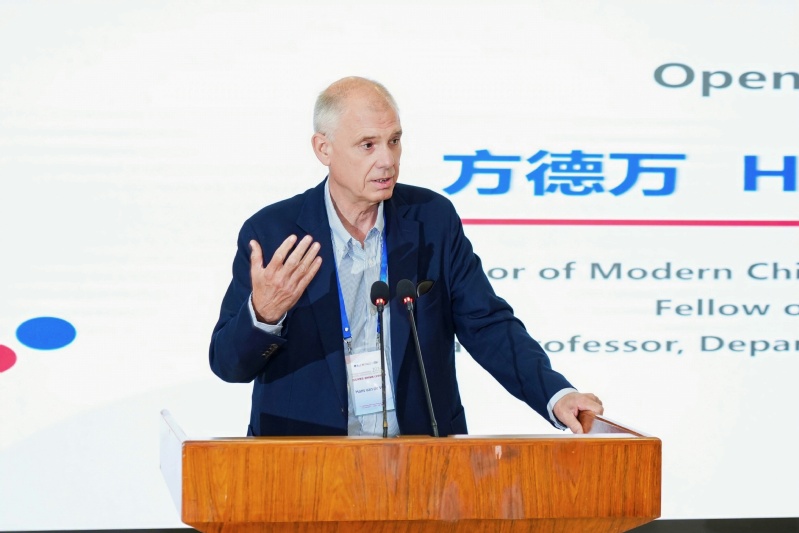
Hans van de Ven, Professor of Modern Chinese History at the University of Cambridge, delivers opening remarks.
Hans van de Ven, Professor of Modern Chinese History at the University of Cambridge and a distinguished Sinologist, delivered opening remarks in which he traced the origins of the Global Humanities Network and discussed the contemporary importance of humanities collaboration across national and disciplinary boundaries. He noted that the humanities worldwide face challenges including funding cuts and external political pressures, and that the collaboration between Fudan and Cambridge clearly demonstrates the core mission of humanities scholarship in safeguarding humanity’s shared cultural heritage.
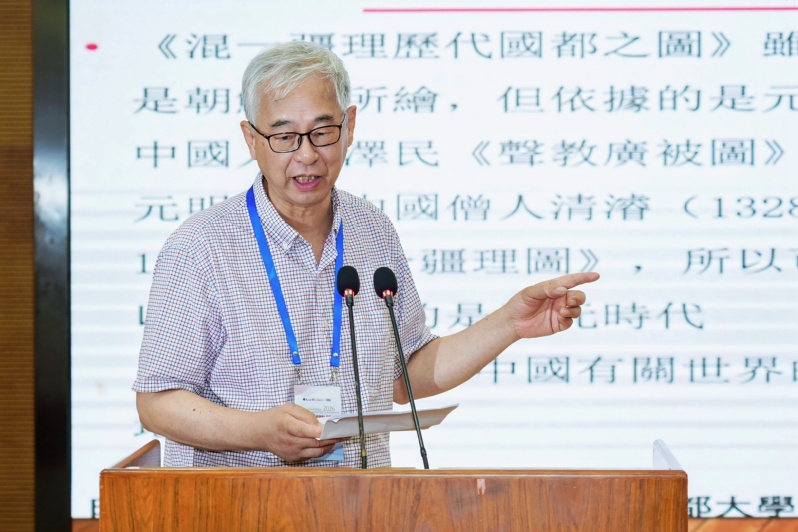
Ge Zhaoguang, Distinguished Senior Professor at Fudan University, delivers a keynote speech.
Ge Zhaoguang, Distinguished Senior Professor at the National Institute for Advanced Humanistic Studies and the Department of History at Fudan University, delivered a keynote speech entitled “An Ancient Map and Three Renaissances: A Discussion of a Proposition Regarding the Histories of Islam, China, and Europe”. Taking the Map of Integrated Lands and Regions of Historical Countries and Capitals, produced in Korea in 1402, as his starting point, he explored the transmission of knowledge about the world across the Islamic world, China and East Asia. He revisited Japanese scholar Miyazaki Ichisada’s proposition of three “Renaissances”, asking whether cultural and intellectual revival had led to fundamental transformations in institutions, ideas and social structures.
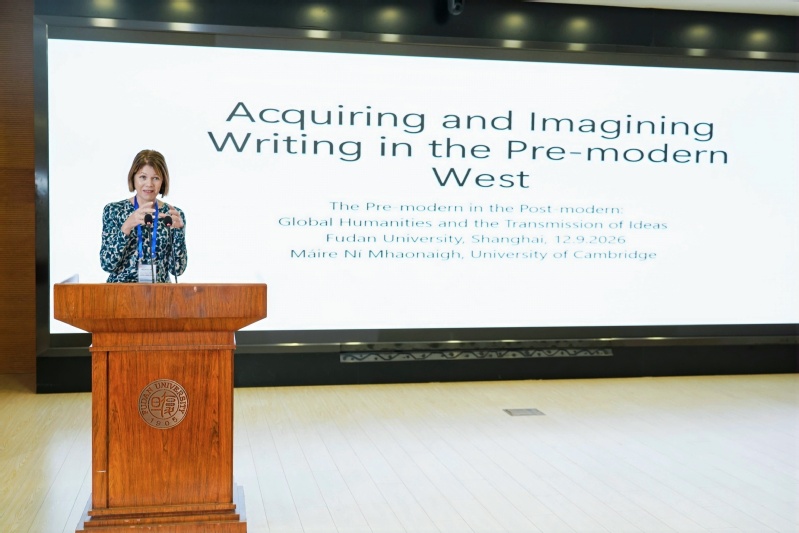
Professor Máire Ní Mhaonaigh of the University of Cambridge delivers a keynote speech.
Máire Ní Mhaonaigh, Professor of Celtic and Medieval Studies at the University of Cambridge, delivered a keynote speech entitled “Acquiring and Imagining Writing in the Premodern West”. Focusing on early medieval Ireland and Britain from the fifth to the seventh centuries, she examined how the technology and materiality of writing were imagined and articulated. She explored the cultural changes and processes of mediation between writing systems and languages that accompanied the emergence of literacy, and considered their implications for the interaction between literate and secondary oral modes of operation in the modern world.
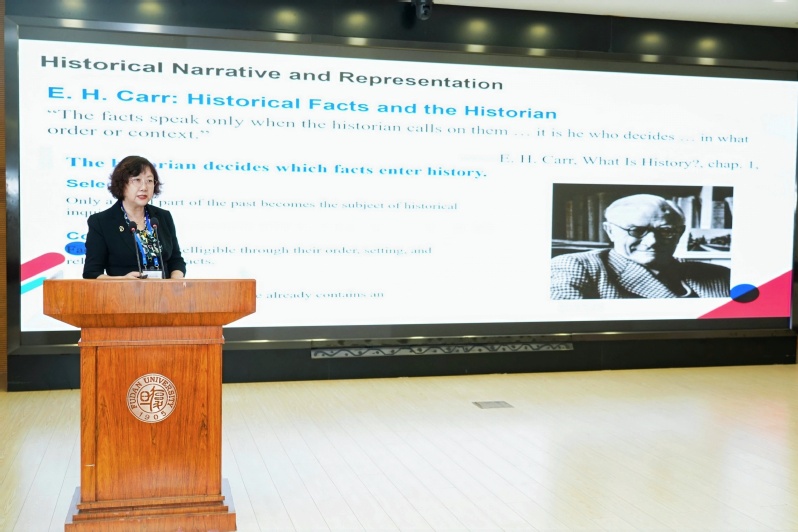
Professor Zhang Xiaohong of Fudan University delivers a keynote speech.
Zhang Xiaohong, Professor at the Institute of Chinese Historical Geography at Fudan University, delivered a keynote speech entitled “Natural Disasters, Local Memory, and the Production of Historical Texts: A Case Study of Shui Gua Xi Baotou”. Through a study of a flood in Baotou during the late Qing period, she showed how the production of historical texts was a differentiated process involving multiple actors. This encompassed eyewitness accounts, adaptations and performances by folk artists, the collection and compilation of materials by local literati, and the eventual textual stabilisation of these accounts by gazetteer compilers. Historical memory, she argued, emerged from the competition, negotiation and accumulation of multiple voices.
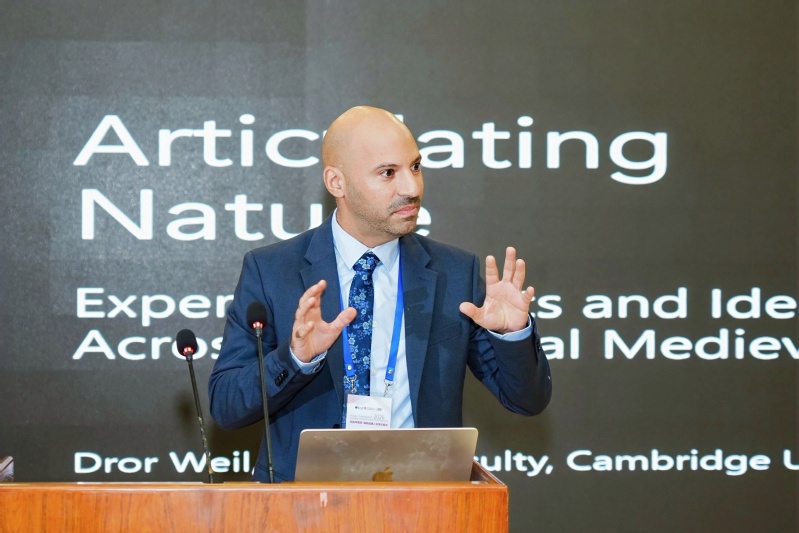
Dror Weil, Associate Professor at the University of Cambridge, delivers a keynote speech.
Dror Weil, Associate Professor in the Faculty of History at the University of Cambridge, delivered a keynote speech entitled “Articulating Nature: Circulating Ideas in the Global Middle Ages”. Focusing on medieval Eurasia, he explored how people understood, articulated and presented their own and others’ experiences of the natural world. He examined how ideas about nature travelled across time, space, cultures and languages, with particular attention to the epistemic grounds that made knowledge intelligible, the creation of commensurability across different systems of thought, the translation of terminologies, and the ways in which ideas were reframed and presented as knowledge as they moved between contexts.
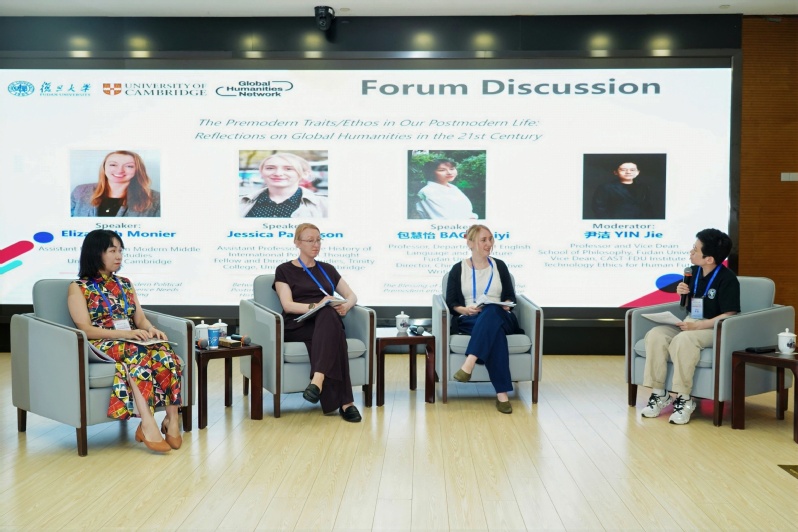
Professor Yin Jie, Vice Dean of the School of Philosophy at Fudan University, then moderated a forum discussion entitled “The Premodern traits/ethos in our Postmodern life: reflection on / highlight of global humanities in the 21st century”. Participants reflected on global humanities in the twenty-first century through the pre-modern traits that persist in post-modern life.
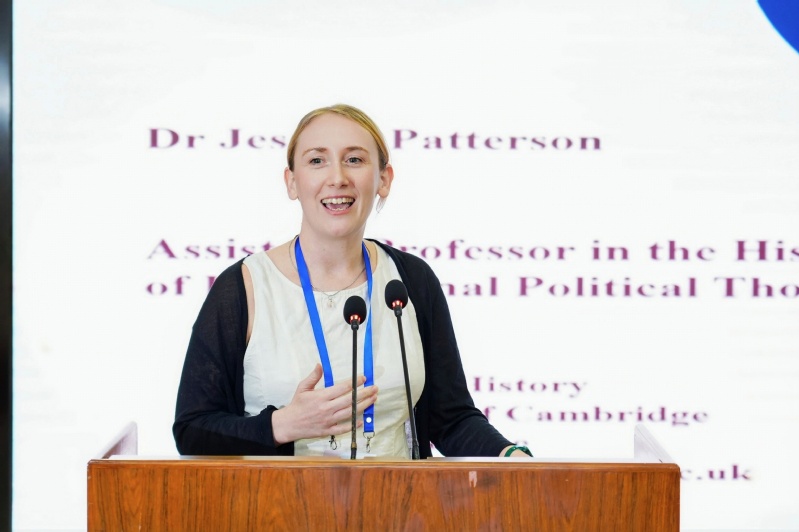
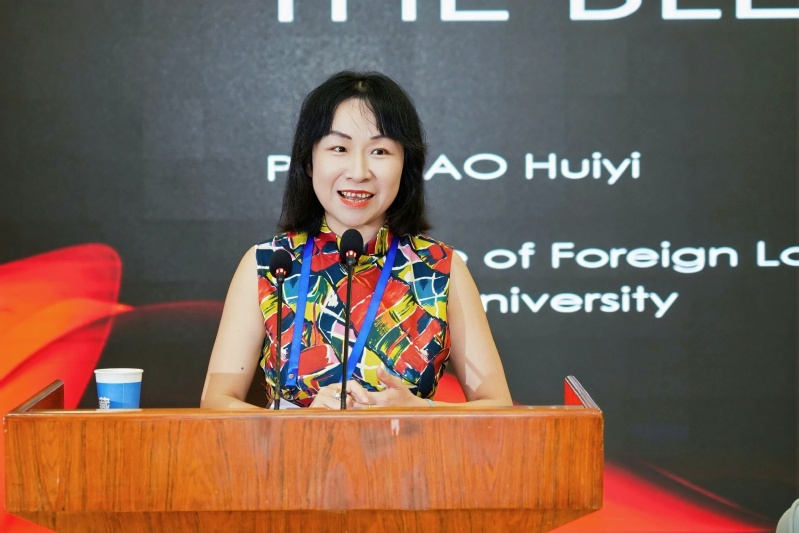
Forum discussion
Elizabeth Monier, Assistant Professor in Modern Middle Eastern Studies at the University of Cambridge, noted that pre-modern political orders centred on traditional loyalties and religious and local identities. She argued that political science should therefore be grounded in historical context and guard against treating Western concepts as universal, observing that the concept of “minority” had also been reshaped by local norms in the Middle East.
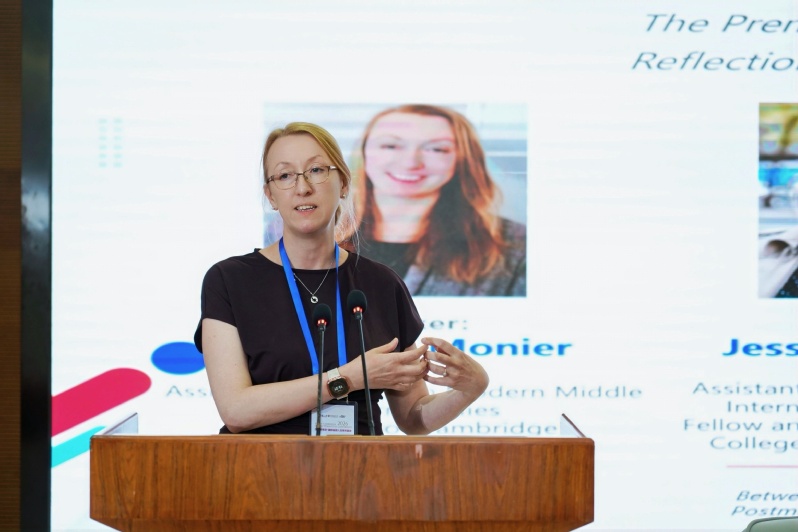
Jessica Patterson, Assistant Professor in the History of International Political Thought at the University of Cambridge, argued that conventional historical periodisation inherited nineteenth-century Western assumptions about linear progress. Enlightenment philosophical histories, she noted, cast spatial differences across the world as a temporal hierarchy. Even post-modern critiques had not fully escaped this developmental framework, while knowledge production remained deeply shaped by its institutional context.
Professor Bao Huiyi of Fudan University drew on the Roman myth of the goddess Cura to explore the concept of cura, arguing that care is central to being human, rather than a burden to be eliminated. She showed how medieval practices of manuscript copying, map-making and the pursuit of truth embodied care, and proposed “I care, therefore I am” in place of “I think, therefore I am”.
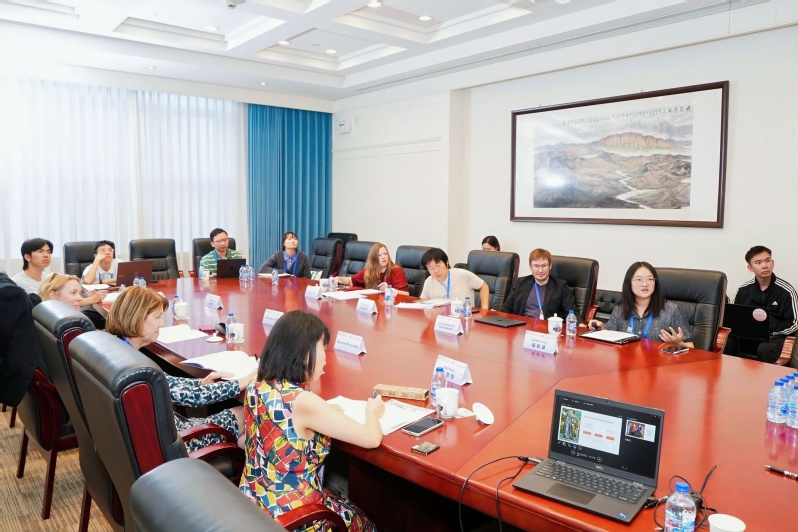
Panel I: Global Movements of Pre-modern Knowledge and Material Transmission
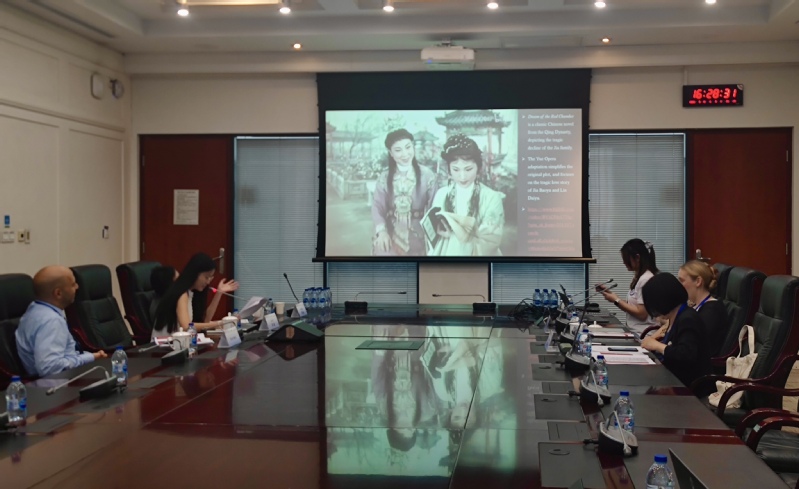
Panel II: The Pre-Modern—Conceptualisation, Construction, and Critical Reconsideration
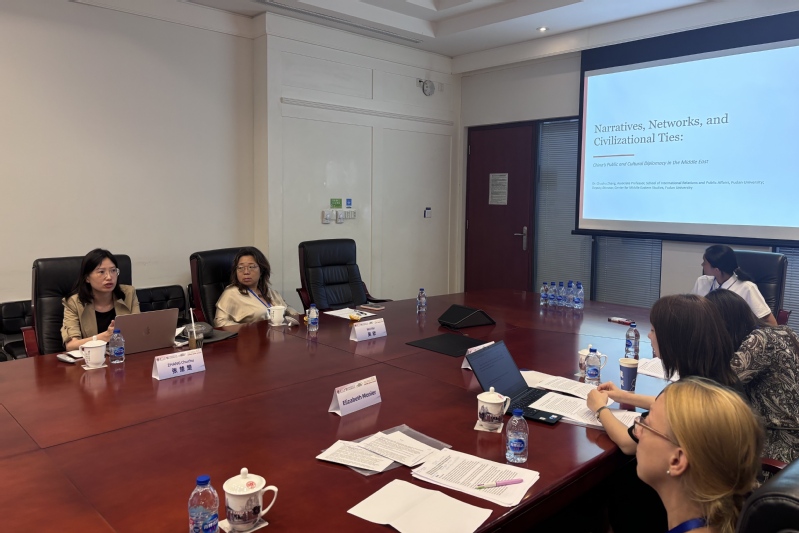
Panel III: Arab-Islamic Civilisation—Intellectual Heritage and Global Transmission
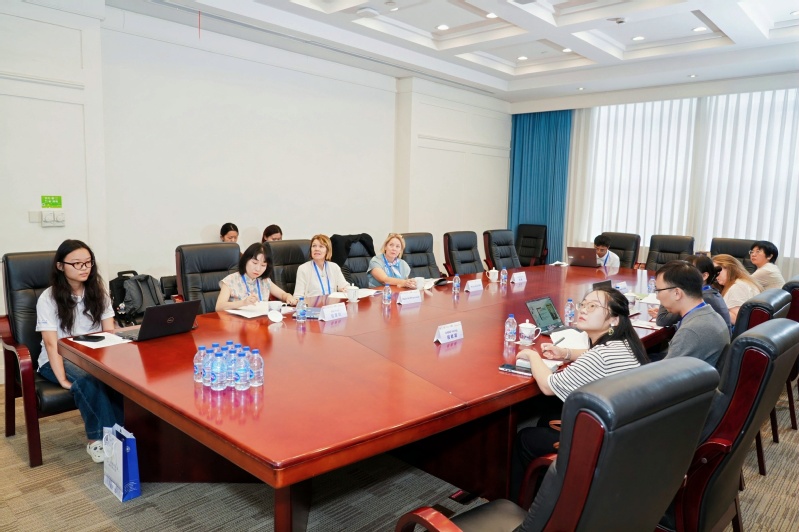
Postgraduate Workshop I
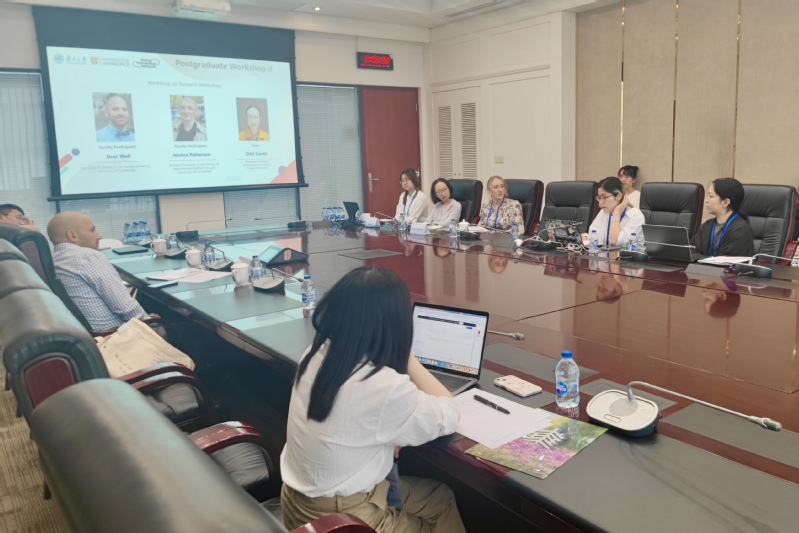
Postgraduate Workshop II
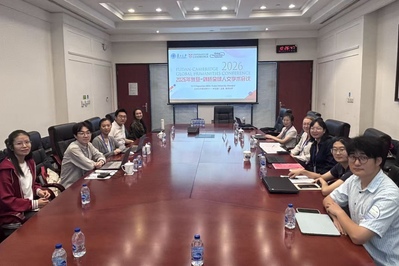
Postgraduate Workshop III
Three thematic panels were held on the afternoon of 12 September, chaired respectively by Professor Bao Huiyi, Associate Professor Zhu Lianbi and Associate Professor Liao Jing of Fudan University. The panel themes were “Global Movements of Pre-modern Knowledge and Material Transmission”; “The Pre-Modern—Conceptualisation, Construction, and Critical Reconsideration”; and “Arab-Islamic Civilisation—Intellectual Heritage and Global Transmission”. Three postgraduate workshops followed on the morning of 13 September, chaired respectively by Professor Bao Huiyi, Associate Professor Zhu Lianbi and Professor Zhang Xiaoyan.
The sessions brought together a wide range of research interests, including theoretical reflections on anthropocentrism, the history of labour political thought in modern Britain, the culture of regional military governors’ headquarters in medieval China, text–image relations in medieval literature, the collation of Dunhuang manuscripts, and the analysis and interpretation of contracts in Chinese and Tibetan. Participants suggested that attention to historical changes over short periods, the movement of people across regions, the contexts of primary sources and the limits of concepts’ universal applicability could yield more nuanced and multidimensional understandings of historical questions. These discussions brought the value of global humanities into clearer focus: taking concrete historical experiences as a basis for rethinking how we relate to the world, without rushing towards universal answers.
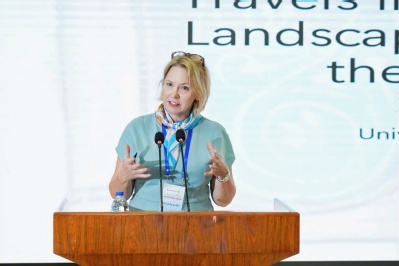
Professor Miranda Griffin of the University of Cambridge delivers a keynote speech.
Miranda Griffin, Professor of Medieval French Literature at the University of Cambridge, delivered a keynote speech entitled “Travels in Space and Time: Landscape, Literature, and the Premodern”. Taking the twelfth-century lai (short narrative poem) Guingamor as her case study, she explored how reading premodern literature could be a form of time travel. Drawing on Bruno Latour’s work, she reflected on historical periodisation and showed how literature and place shape our sense of time.
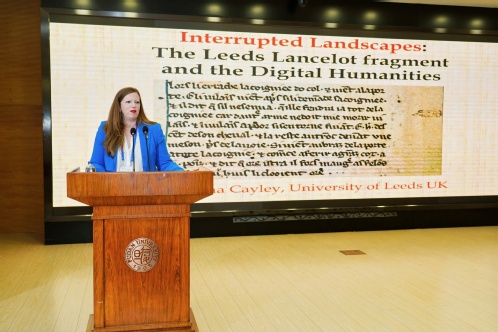
Professor Emma Cayley of the University of Leeds delivers a keynote speech.
Emma Cayley, Professor of Medieval French at the University of Leeds, delivered a keynote speech entitled “Interrupted landscapes: the Leeds Lancelot fragment and the Digital Humanities”. Taking the Lancelot fragment discovered at the University of Leeds as her case study, she explored how fragmentary form shapes our understanding of texts and landscapes. She connected these questions with early modern playing cards and digital humanities research, tracing the “double life” of fragments through their histories of transmission and reuse.
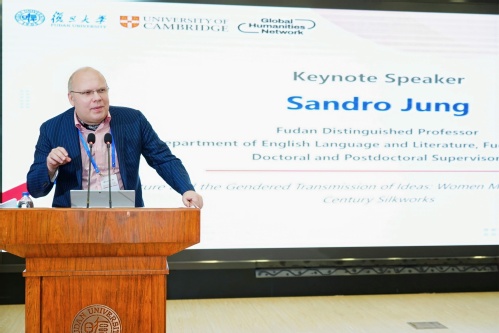
Sandro Jung, Fudan Distinguished Professor, delivers a keynote speech.
Sandro Jung, Fudan Distinguished Professor in the Department of English Language and Literature at Fudan University, delivered a keynote speech entitled “Literature and the Gendered Transmission of Ideas: Women Making Late Eighteenth-Century Silkworks”. He explored literary silkwork pictures as a medium of transmission and considered how women makers’ interventions shaped meaning and expressed gendered agency. Drawing on three case studies—J. W. von Goethe’s The Sorrows of Werther, J. F. Marmontel’s tale of Adelaide, the shepherdess of the Alps, and James Thomson’s Palemon and Lavinia story—he showed how young women translating these tales into late eighteenth-century silkwork embroideries developed narratives of their own, altered the original works and shaped the transmission of the stories.
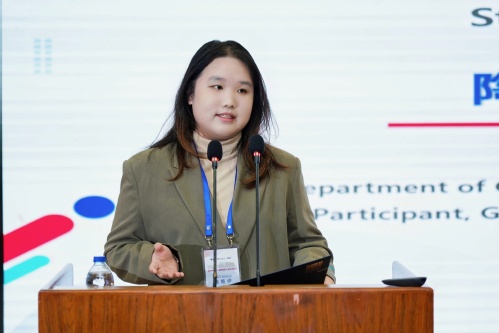
Student representative Tao Weiyi shares her reflections.
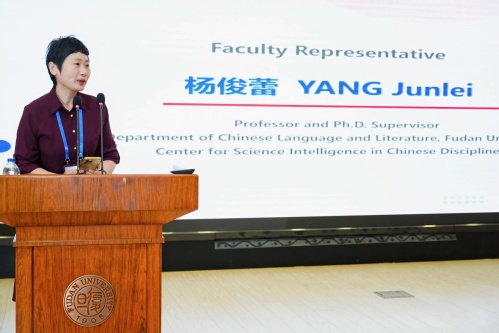
Faculty representative Professor Yang Junlei shares her reflections.
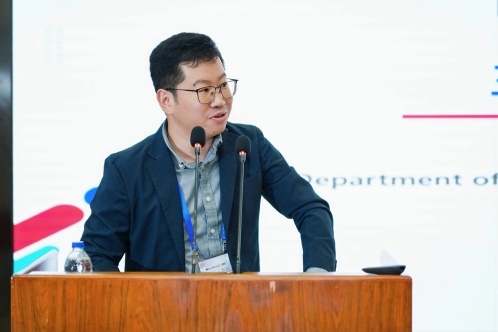
Faculty representative Associate Professor Wang Tao shares his reflections.
As the conference drew to a close, student and faculty representatives shared their reflections. Student representative Tao Weiyi drew on her summer school experience to explore the relationships between water resources, literature, archaeology and local cultural memory in discussing “water, climate and global humanities”. She noted that face-to-face intercultural exchange helps cultivate intercultural empathy and can enable short-term academic programmes to give rise to lasting scholarly friendships and collaboration.
Faculty representative Professor Yang Junlei of Fudan’s Department of Chinese Language and Literature reflected on her exchange experience at Cambridge. She emphasised that global humanities should transcend national and disciplinary boundaries and connect historical, spatial and temporal perspectives. She also proposed bringing global humanities resources into engineering education, using interdisciplinary dialogue involving literature, science fiction and engineering imagination to develop future engineers’ grounding in the humanities, imagination and long-term perspective.
Associate Professor Wang Tao, also a faculty representative from Fudan’s Department of Chinese Language and Literature, drew on his experience as a visiting scholar at Cambridge to discuss how the cross-regional and integrative approaches to classical Chinese literature adopted in British academia could inform specialist research. He focused in particular on how highly specialised research on classical texts could be framed in terms of broader questions about human experience for discussion within the global scholarly community. He also stressed the irreplaceable value of insights gained through direct participation in academic life and face-to-face exchanges with fellow scholars.
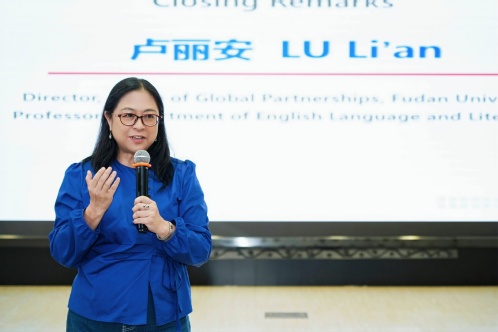
Professor Lu Li’an of Fudan University delivers the closing remarks.
Professor Lu Li’an of Fudan University delivered the closing remarks, thanking all the participating scholars. She noted that the collaboration between Fudan and Cambridge goes beyond producing tangible scholarly outcomes. The international scholarly community jointly built by the two universities also provides an ongoing platform for communication, fostering sustained academic exchange, mutual trust and friendship. All participants then gathered for a group photograph.
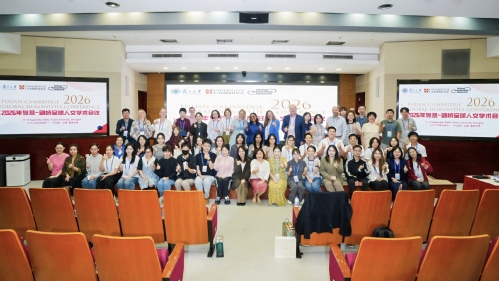
Participants at the 2026 Fudan-Cambridge Global Humanities Conference pose for a group photograph.

